People talk about Paris like it’s a postcard-cobblestone streets, croissants at dawn, the Seine glinting under soft light. But there’s another side to the city that doesn’t show up in travel brochures. It’s quieter. More personal. And for some, it involves an escort in paris-not as a transaction, but as a moment of connection in a place where loneliness can feel louder than the traffic on the Champs-Élysées.
It’s not about finding someone to satisfy a fantasy. It’s about finding someone who listens. Who doesn’t ask why you’re alone. Who lets you be human in a city that moves too fast to notice. I’ve met men who flew in from Tokyo, women who left marriages in Minnesota, travelers who just needed to feel seen. They didn’t come for sex. They came because they were tired of pretending.
It’s Not What You Think
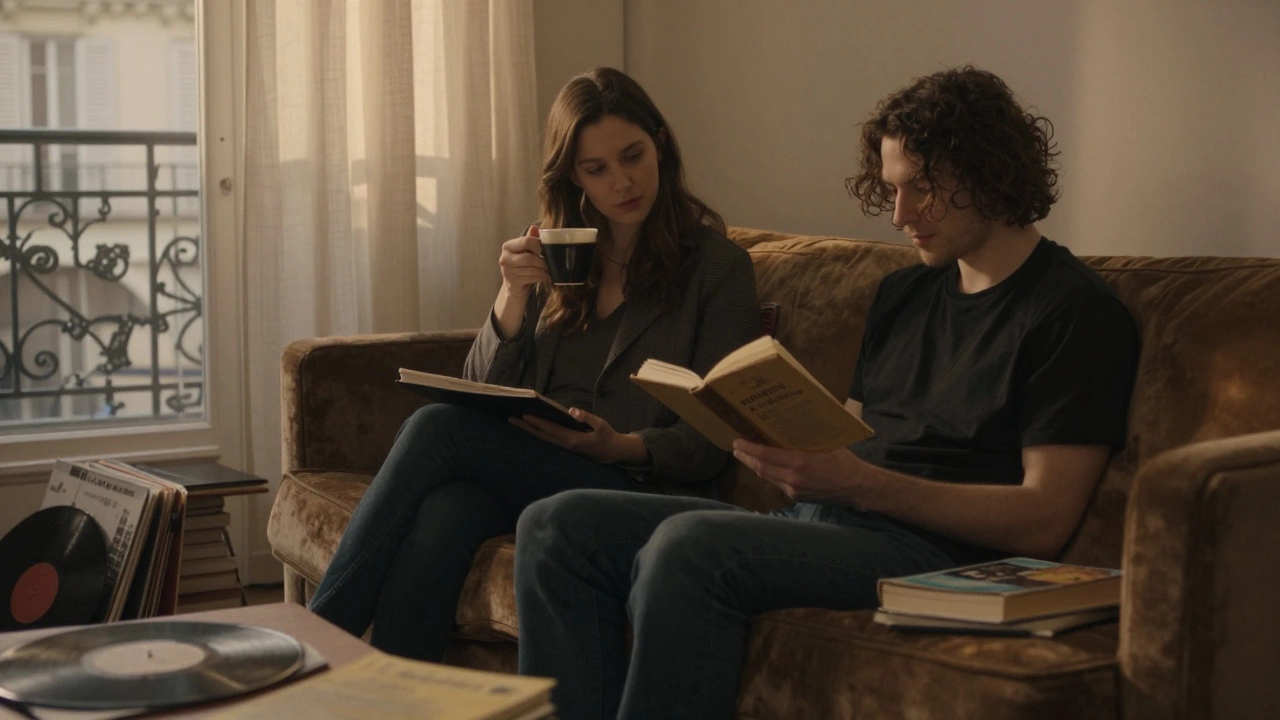
The word "escort" carries baggage. Movies make it sound like a scene from a spy thriller. Tabloids turn it into something sleazy. But real experiences? They’re often tender. Quiet. A cup of coffee in a small apartment near Place de Clichy. A walk through Luxembourg Gardens without the pressure to talk. A shared silence that says more than any pickup line ever could.
There’s no script. No checklist. No demand for performance. The women I’ve spoken with-those who work in the 13th, the 19th, the 16th-don’t see themselves as service providers. They see themselves as companions. Some are artists. Others are students. A few are mothers who need flexibility. They don’t sell bodies. They sell presence.
The Geography of Intimacy
Paris isn’t one city. It’s dozens. Each arrondissement has its own rhythm. In the 13th, you’ll find a different energy than in the 19th. The 13th is more grounded-family-run cafés, Vietnamese bakeries, quiet courtyards. It’s where you might meet someone who works at a library during the day and spends evenings reading poetry to strangers. The 19th? More raw. More real. Parks like Buttes-Chaumont hold conversations that don’t happen in tourist zones. That’s where you’ll hear stories about lost loves, immigration, dreams that didn’t pan out.
When someone says "escort paris 19," they’re not just naming a district. They’re pointing to a mood. A space where vulnerability isn’t punished. Where you can say, "I’m not okay," and not be judged for it.
And then there’s the 16th-where wealth hides behind wrought iron gates. It’s not where most people expect intimacy to happen, but it’s there too. In those homes, the conversations are quieter. The needs are deeper. The loneliness? Just as heavy.
Why This Isn’t About Sex
Sex happens. But it’s rarely the point. I talked to a man from Canada who came to Paris after his wife passed away. He didn’t want to be touched. He just wanted someone to sit with him while he cried. He said, "I didn’t know how to grieve in a city where everyone smiles too much. She was the only one who didn’t look away."
Another woman from Brazil told me she works as an escort because it lets her pay for her daughter’s music lessons. She plays piano for clients on weekends. One man, a retired professor from Germany, asks her to play Debussy every time he visits. He doesn’t ask for anything else. He just says, "Your hands make the music feel alive."
These aren’t transactions. They’re exchanges of humanity.
The Rules Nobody Talks About
There are unspoken rules. Always meet in public first. Never rush. Never assume. The women who do this work set boundaries with care. They say no more often than people realize. They choose who they spend time with. They don’t take every offer. They don’t need to.
And the men? The ones who understand this? They don’t ask for photos. They don’t demand time limits. They show up with a book. A bottle of wine. A question: "What’s something beautiful you’ve seen this week?"
That’s the real difference. The ones who leave changed aren’t the ones who had sex. They’re the ones who were heard.

What Happens After?
Some people come back. Not for more sex. But because they miss the quiet. The way the light hits the ceiling in a Parisian bedroom at 6 a.m. The smell of rain on the cobblestones outside. The feeling that, for a few hours, they weren’t invisible.
Others never speak of it again. They don’t post about it. They don’t tell their friends. But sometimes, years later, they’ll send a postcard. Just a line: "I still think of you when I hear Chopin."
That’s the quiet legacy of this kind of connection. It doesn’t leave receipts. It leaves echoes.
The Real Cost
There’s a cost to this kind of intimacy. The women who do this work carry stigma. They’re called names. They’re judged by strangers who’ve never met them. They’re told they’re broken. But the ones who stay? They’re not broken. They’re brave.
And the men? They pay a different price. They pay with silence. With shame. With the fear that wanting connection makes them weak. But in Paris, in those quiet rooms, they learn it’s the opposite.
What you find here isn’t a fantasy. It’s a mirror. And sometimes, the most dangerous thing you can do is look too closely.
That’s why people come back. Not for the body. Not for the sex. But because, for once, they didn’t have to be anyone else.
And if you’re reading this wondering if it’s for you? Ask yourself this: When was the last time someone looked at you and didn’t see what they wanted to see? When was the last time you felt safe enough to be real?
That’s the real question. Not whether you can afford it. But whether you’re ready to be known.
There’s a place in Paris where the streets don’t have names. Just memories. And if you’re lucky, you’ll find someone there who remembers you, even if you never say your name.
escort paris 19
escort paris 13